Research
Animals, Wilderness, and the Stories that Connect Us
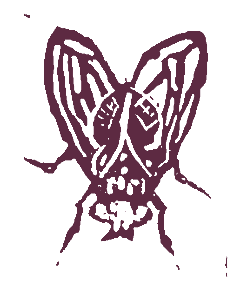
My research sits at the intersection of the environmental humanities and cultural geography. I study how animals, tourists, and technologies shape American ideas of wilderness, and how those ideas shape landscapes in return. My current work centers on the Adirondack Park, a six-million-acre experiment in keeping land "forever wild."
Animals & Wilderness
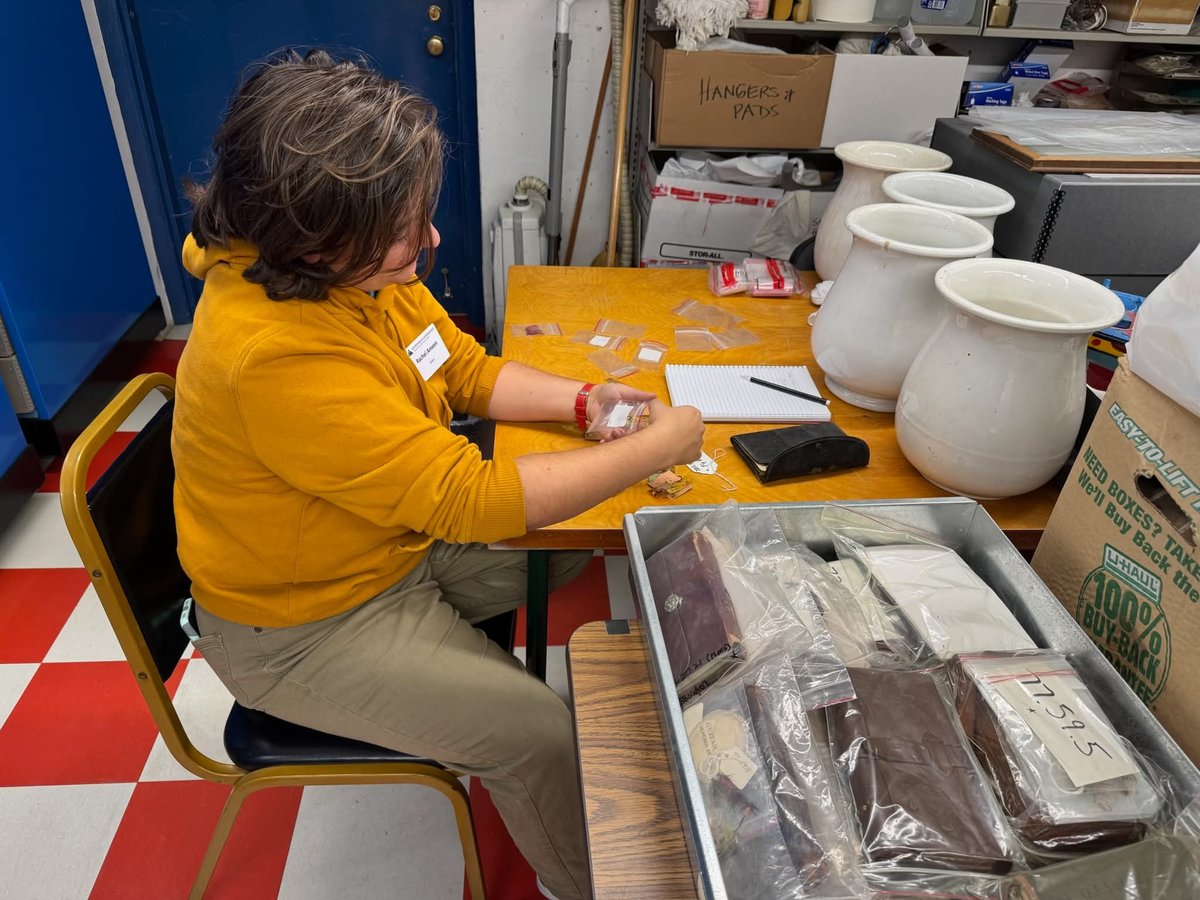
My dissertation, Forever Wildlife: Stories, Recreation, and the Making of the Adirondacks, examines how creatures at the margins — black flies and beavers among them — define Adirondack wilderness in the past and present. Rather than treating wilderness as a fixed backdrop, I ask how the animals people swat, trap, admire, and tell stories about have shaped what "forever wild" has meant across the region's history. This work draws on my 2025–26 Peter C. Welsh Research Fellowship at the Adirondack Experience, where I worked in the collections that hold much of this history.
I am especially interested in the animals that resist the tidy categories of conservation — the pests, nuisances, and nuisances-turned-icons whose reputations shift with the culture around them. These creatures reveal how ideas of authenticity and belonging get worked out on the ground, one encounter at a time.
An article from this project, "Performing Wilderness: Black Flies and the Intimate Geographies of Adirondack Authenticity," is under review at the Journal of Historical Geography.
Tourism, Recreation & Place
The theme unifying my research locations — the Adirondacks and coastal New England — is the vital role recreation and tourism play in their cultures, communities, and economies. My dissertation argues that cultural conflicts are often resolved in arenas of recreation and leisure, where questions about who a place is for become visible and negotiable in a way they rarely are elsewhere.
Much of this work traces how disruption reshapes those arenas. I have researched how COVID-19 transformed tourism and recreational boating across coastal New England, drawing newcomers into long-established recreational cultures and forcing communities to reckon with sudden change. These moments of upheaval expose the usually unspoken rules of access and belonging that govern leisure landscapes.
Questions of access, authenticity, and who belongs in "wild" places run through all of my work on recreation — and they connect my coastal research to the Adirondack Park, where the same tensions play out on a six-million-acre scale.
AI & the Environmental Humanities
I write about what AI means for how we research, teach, and think in the environmental humanities, with work accepted at Resistance and under review at the Journal of Geography in Higher Education. I treat AI as a critical threat to pedagogy and the humanities, but also as a transformative technology that we must be able to both critique and engage thoughtfully and holistically.
Refusing the tool outright, I argue, cedes too much; adopting it uncritically cedes even more. My work asks how scholars and teachers can hold those positions at once — naming the genuine harms AI poses to student learning and humanistic inquiry while taking seriously what it changes about the practice of research.
This strand of my work grows out of the classroom as much as the archive, and it informs how I teach students to write, read, and think in a moment when the technologies of thought are themselves in question.
Environmental Education & Community Engagement
I have worked with the Gulf of Maine Institute (GOMI), a nonprofit that mentors young people across the Gulf of Maine bioregion to become stewards of their local environments. The Gulf of Maine stretches from Cape Cod to Nova Scotia and ranks among the most productive marine ecosystems on Earth — a nursery for cod, lobster, seabirds, and whales, and a source of food, livelihood, and recreation for the communities along its watershed. It is also warming faster than nearly any other body of water on the planet, which makes the work of raising a next generation of stewards especially urgent.
As a program coordinator and member of the Board of Directors, I worked with teachers, students, and community partners to turn local environmental questions into hands-on, place-based projects. When COVID-19 shut down in-person programming, I spearheaded the design of a COVID-safe curriculum that kept GOMI's schools connected to fieldwork and to one another across the bioregion — adapting community-based stewardship for a moment when community itself had to be reimagined.
I also helped secure the funding that sustains this work, writing and winning several grants for the organization, including a three-year NOAA Bay Watershed Education and Training (B-WET) grant supporting watershed education across GOMI's partner schools.

Peer-Reviewed Publications
- "The Environmental Humanities in the Age of AI." Resistance: A Journal of Radical Environmental Humanities, forthcoming 2027.
- "Performing Wilderness: Black Flies and the Intimate Geographies of Adirondack Authenticity." Under review
- "Teaching with AI, Teaching Against AI." Under review
- "Creative Practice and Spatial Storytelling in the Cartographic Classroom," with Yoxall, Kelly, Kline, Montgomery, Vazquez-Carrillo, and Brown. Cartographic Perspectives, forthcoming 2026.
Invited Talks
- "Performing Wilderness: Black Flies and the Intimate Geographies of Adirondack Authenticity." Huntington Lecture Series, SUNY ESF, Newcomb, NY. August 2026. Download slides PDF
Conference Presentations
- "Environmental History in the Age of AI." American Society for Environmental History, Kansas City, MO. 2026. Download slides PDF
- "Higher Education in the Age of LLMs." American Association of Geographers, San Francisco, CA. 2026. Download slides PDF
- "Mapping Forever Wild: Animals and Recreation in the Adirondacks." National Environment and Recreation Research Symposium, Annapolis, MD. 2024. Download slides PDF
- "Tradition, Opportunity, and Viral Illness: How the Onset of COVID-19 Reshaped Coastal Tourism in New England." National Environment and Recreation Research Symposium, Annapolis, MD. 2023. Download slides PDF
Public Writing & Reviews
- "Bug Off: Duflo, Dope, and the Adirondack Fight to Control Pest Control." Adirondack Experience Newsletter, Winter/Spring 2026. Read online
- Review of Outsider Animals. H-Net, 2026. Download review PDF
- Review of Heppler, Silicon Valley and the Environmental Inequalities of High-Tech Urbanism. H-Net, 2026. Download review PDF
- Review of What If We Get It Right. Gulf of Maine Institute Journal, 2025. Read online · Download review PDF
- Review of David R. Montgomery's Dirt Trilogy. Gulf of Maine Institute Journal, 2022. Download review PDF
- "Nautical Newcomers: How the Pandemic Has Changed Recreational Boating." Currents, 2022. Download PDF